
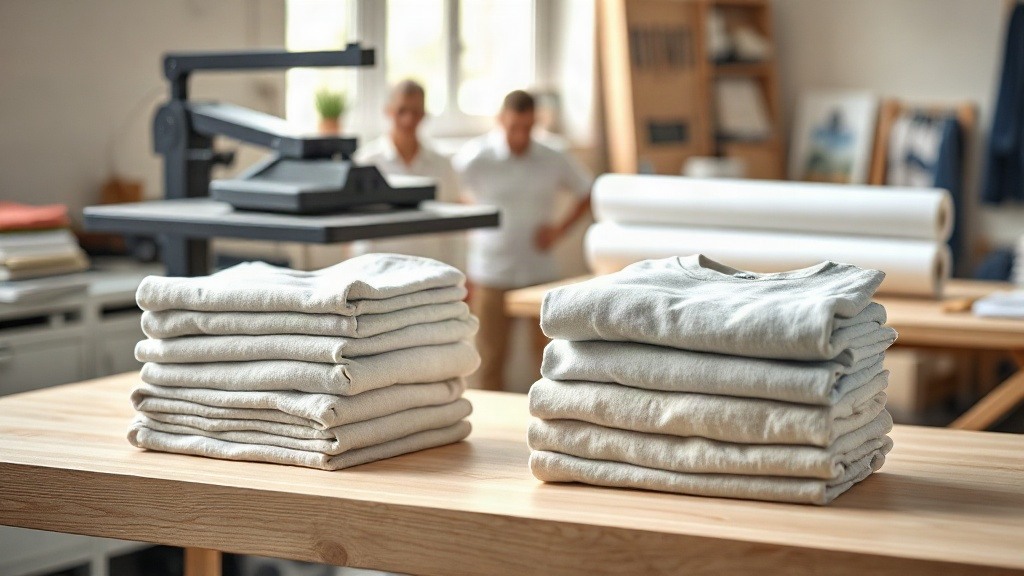
Most people who order custom apparel focus entirely on the artwork. They spend hours picking fonts, colors, and placement, then grab whatever blank shirt is cheapest. That order of priorities is backwards. The garment underneath the print does more for how a design looks after ten washes than most design choices combined. This is where smart blanks enter the conversation, and once you understand what separates them from ordinary blanks, you will never look at a plain tee the same way again.
What Makes a Blank Smart?
A smart blank is a garment engineered with decoration in mind. That sounds like marketing language until you compare two shirts side by side. A standard blank is designed to look good on a hanger and feel soft in the store. A smart blank is designed so ink, film, and thread behave predictably on its surface.
That difference shows up in a few concrete ways:
- Consistent fabric tension. The knit is controlled so the shirt does not stretch or bunch under a screen or heat press.
- Low-shrink cotton blends. Garments are pre-shrunk or knit to hold their size, so a printed design does not distort after the first wash.
- Flat, tight weave surfaces. Fine details in dtf transfers and halftone screens hold their edges instead of bleeding.
- Stable dye lots. Reorders months apart still match the original run, which matters for team uniforms and staff shirts.
- Reinforced seams and necklines. The garment survives the heat and pressure of commercial decoration without warping.
None of these features are glamorous. They are the unglamorous details that decide whether a finished shirt looks professional or homemade.
Why Smart Blanks Matter More With Modern Decoration
Decoration methods have changed fast over the past decade. Heat-applied films, digital transfers, and hybrid techniques now compete with traditional screen printing, and each method has its own demands on a garment.
DTF Transfers Need a Predictable Surface
Direct-to-film printing has become a favorite for short runs and full-color artwork because it skips setup costs and handles gradients beautifully. The catch is that a DTF transfer is only as good as the fabric it lands on. A shirt with uneven weave or heavy sizing (the chemical finish many cheap blanks carry) can cause the film to lift at the edges or crack along fold lines.
Smart blanks are usually finished with minimal sizing and a smooth face, so the adhesive bonds evenly. If you have ever pressed a transfer onto a bargain tee and watched it peel after three washes, you have experienced the problem smart blanks are built to prevent.
Screen Printing Rewards Consistency
Screen printers work in repetition. The same squeegee stroke, the same pressure, the same flash time, hundreds of times in a row. Any variation in the garment throws off that rhythm. A shirt that sits slightly thicker under the screen produces a heavier ink deposit; a thinner one produces a lighter print. Across a run of 200 pieces, those small differences become visible.
Smart blanks keep the variables steady, which is why print shops tend to prefer them even when the per-unit cost runs slightly higher. Less spoilage and fewer reprints usually erase the price gap.
Embroidery Needs Structure
Thread pulls on fabric. On a loose or unstable knit, dense embroidery can pucker the surrounding area or leave the design sitting unevenly. Smart blanks are typically knit with tighter gauge yarn and stabilized construction, so a logo or emblem stays flat and crisp through repeated wear.
Where Shaka Wear Fits In
Among the brands that have built a following in the decoration world, shaka wear stands out for combining streetwear weight with print-friendly construction. The brand's tees and fleece are known for a heavier hand feel, boxy modern cuts, and fabric that holds up under heat presses and screens alike.
For shops working with smart blanks, shaka wear offers a useful middle ground: the visual weight customers associate with premium streetwear, paired with the technical consistency decorators need. A heavyweight cotton tee with a stable knit is close to ideal for a DTF transfer, because the film sits on a firm surface instead of a flimsy one.
That combination matters for anyone building a brand rather than just filling a one-off order. If your shirts are going to be worn, photographed, and reordered, the blank is part of your product identity, not just a delivery vehicle for a logo.
How to Evaluate a Blank Before You Commit
You do not need a lab to judge whether a blank qualifies as smart. A few practical checks tell you most of what you need to know.
- Stretch it gently. A smart blank springs back to shape. One that stays stretched out will distort prints over time.
- Look at the light through the fabric. Uneven density shows up as blotchy patches, which is where ink and film will misbehave.
- Feel for slickness. A waxy or stiff hand often signals heavy sizing that can interfere with adhesion.
- Wash one sample before ordering bulk. Shrinkage and colorfastness reveal themselves quickly, and one test shirt is cheaper than a ruined run.
- Ask about dye lot consistency. If the supplier cannot answer, that is your answer.
These checks take a few minutes and save far more time than they cost. Anyone who has reprinted an entire order because the blanks shrank unevenly understands the trade-off.
Matching the Blank to the Decoration Method
Not every smart blank suits every technique. A few pairings tend to work well:
- DTF transfers: mid to heavyweight cotton or cotton-poly blends with a smooth face and low sizing.
- Screen printing: 100% cotton with a tight, even knit for crisp detail and good ink penetration.
- Embroidery: stable knits with enough body to support dense stitching without puckering.
- Heat transfer vinyl: fabrics that tolerate medium heat without scorching or glazing.
When the garment and the method are aligned, the finished product looks intentional. When they are mismatched, even excellent artwork can look second-rate.
Frequently Asked Questions About Smart Blanks
Are smart blanks more expensive than regular blanks?
Usually yes, though the gap is smaller than people expect. The real cost comparison is not price per shirt but price per sellable shirt. Fewer misprints, less shrinkage, and better wash durability often make smart blanks cheaper overall, especially on orders where a single ruined piece means a reprint.
Can I use DTF transfers on any cotton t-shirt?
Technically yes, but results vary widely. Smooth, low-sizing fabrics hold transfers far better than rough or heavily finished ones. If you are printing on a budget blank, test one shirt through several wash cycles before committing to a full run.
Is Shaka Wear suitable for screen printing and embroidery?
Yes. The brand's heavier cotton construction handles both well. The tighter knit supports clean screen detail, and the fabric body gives embroidery enough structure to sit flat without pulling the surrounding area out of shape.
How do I know if a blank will shrink after printing?
Check the spec sheet for pre-shrunk or low-shrink claims, then verify with a wash test. Measure the shirt before and after a hot wash and dry cycle. If it moves more than a few percent, expect your printed design to distort along with it.
Do smart blanks matter for small orders?
They matter at every scale, but the payoff is most obvious on repeat orders. Consistent sizing and dye lots keep a team, staff, or product line looking uniform over time, which is difficult to achieve when blanks come from inconsistent sources.
The Bottom Line on Choosing Blanks
The garment is not a neutral backdrop. It is the foundation your entire design sits on, and it decides how that design ages. Smart blanks exist because decorators got tired of fighting unpredictable fabric, and the category has grown for good reason. Whether you are pressing dtf transfers onto a dozen shirts or building a full apparel line on shaka wear tees, starting with the right blank removes an entire category of problems before they happen. Pick the garment as carefully as you pick the artwork, and the finished product will show it.