
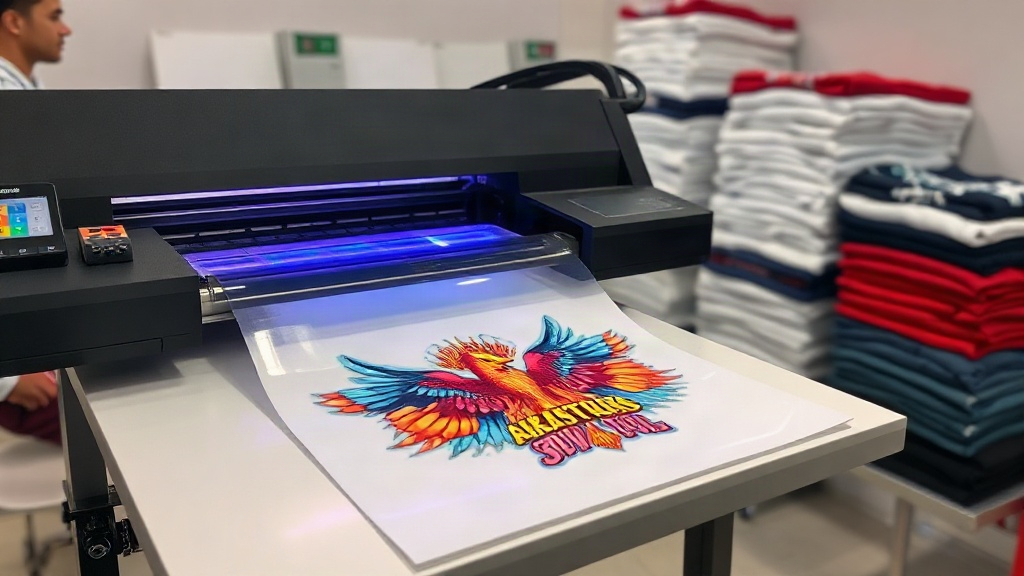
When you sell custom apparel, the gap between a great design and a profitable product often comes down to production. Traditional screen printing demands volume, and vinyl heat transfer limits detail. That's where DTF printing on demand changes the equation. DTF, or Direct to Film, is a digital printing method that transfers full-color designs onto fabric with impressive durability and stretch. Paired with print-on-demand (POD), it allows you to produce one-off items or small batches without inventory or minimums. In this guide, we'll walk through the DTF process, its advantages, costs, and how to use it effectively for your custom apparel business.
What Is DTF Printing on Demand?
DTF printing on demand combines Direct to Film technology with a production model that prints items only when ordered. Instead of stocking shelves with finished goods, you print the transfer, apply it to a garment, and ship it to the customer. This approach eliminates the need for bulk orders and lets you offer a wide range of designs, colors, and sizes without upfront investment.
The DTF process itself involves printing a design onto a special film using pigment-based inks, applying a hot-melt adhesive powder, and then curing the powder. The resulting transfer can be stored and later applied to a garment with a heat press. Because the design sits on top of the fabric rather than being woven into it, DTF works on almost any material, including cotton, polyester, blends, and even treated nylon.
How DTF Printing Works Step by Step
Understanding the workflow helps you troubleshoot and optimize. Here's a breakdown of the key stages:
- Design Preparation: Create your artwork in a vector or high-resolution raster format. Ensure colors are set for CMYK printing and add a white underbase if needed for dark garments.
- Film Printing: A DTF printer lays down CMYK inks plus white ink onto a PET film. The white ink acts as a base, allowing the colors to pop on dark fabrics.
- Powder Application: While the ink is still wet, a hot-melt adhesive powder is sprinkled over the film. Excess powder is shaken off.
- Curing: The film passes through a curing oven or heat press to melt the powder, creating a dry, stable transfer.
- Transfer Application: The transfer is placed on the garment and pressed with a heat press at specific temperature, pressure, and time. After cooling, the film is peeled away, leaving the design bonded to the fabric.
Each step requires attention to detail. Temperature and time variations can affect adhesion and feel, so following your printer and powder manufacturer's recommendations is crucial.
Why DTF Printing on Demand Beats Traditional Methods
For small business owners and creators, DTF offers several compelling advantages over screen printing, DTG, and vinyl.
- No minimums: You can print one shirt or one hundred with the same setup. This is perfect for testing designs or offering personalized items.
- Unlimited colors: DTF uses CMYK plus white, so you can print photorealistic images, gradients, and fine details without color separation fees.
- Fabric versatility: Unlike DTG, which works best on 100% cotton, DTF adheres to cotton, polyester, blends, and even some synthetic materials.
- Durability: When applied correctly, DTF transfers resist cracking, peeling, and fading far better than vinyl and often outperform DTG on polyester.
- Stretch and feel: The transfer stretches with the fabric, making it suitable for performance wear. The hand feel is relatively soft, though slightly more noticeable than DTG on light shirts.
These benefits make DTF a strong candidate for print-on-demand businesses that want to offer variety without compromising quality.
Setting Up Your DTF Printing on Demand Workflow
Integrating DTF into your POD operation requires planning. You'll need a DTF printer, a heat press, film, powder, and curing equipment. If you're just starting, you can outsource transfer production to a DTF service and focus on pressing and shipping. As volume grows, bringing printing in-house can reduce costs and turnaround times.
Essential Equipment for DTF
- DTF Printer: Options range from converted Epson printers to dedicated DTF machines. Look for models with white ink circulation and reliable print heads.
- Heat Press: A clamshell or swing-away press with precise temperature and pressure control is vital. For DTF, you'll need consistent pressure across the platen.
- Curing Oven: While you can cure with a heat press, a dedicated oven speeds up production and ensures even curing.
- Films and Powders: Use high-quality PET film and adhesive powder compatible with your ink. Cheap supplies often lead to poor wash durability.
Don't forget a good RIP software to manage color profiles and white ink layering. This is especially important for detailed designs.
Cost Breakdown: Is DTF Printing on Demand Profitable?
Profitability depends on your pricing, volume, and efficiency. Here are the main cost components:
- Transfer cost: If you outsource, expect to pay $2 to $5 per A4 transfer, depending on size and quantity. In-house printing can bring this down to $1 or less after equipment is paid off.
- Garment cost: Blank tees range from $3 to $10 for basic styles, more for premium or specialty fabrics.
- Labor and overhead: Pressing and packing take time. Factor in your hourly rate and utilities.
Selling a custom shirt for $25 to $35 is common. With a transfer cost of $1.50, a $5 garment, and $3 in labor and overhead, your profit per shirt could be $15 or more. The key is to streamline your process and minimize waste.
Common Challenges and How to Overcome Them
DTF isn't without pitfalls. Here are frequent issues and solutions:
Poor Adhesion After Washing
This usually stems from insufficient pressure, incorrect temperature, or under-cured powder. Invest in a pressure gauge for your heat press and test with a wash test before selling.
Clogged Printheads
White ink settles quickly. Implement daily maintenance: shake ink cartridges, run cleaning cycles, and keep the printhead moist. A humidifier in dry climates helps too.
Color Accuracy
Colors may look different on film versus fabric. Use ICC profiles and proof your prints on actual garments. Adjust your design's color mode to CMYK for more predictable results.
Best Practices for DTF Printing on Demand
To get the most from DTF, follow these guidelines:
- Test, test, test: Before launching a design, print a sample and wash it multiple times. Check for cracking, fading, and feel.
- Store transfers properly: Keep them in a cool, dry place away from direct sunlight. Use them within a few months for best results.
- Optimize your press settings: Each fabric and transfer size may need slight adjustments. Keep a log of successful settings.
- Offer clear care instructions: Tell customers to wash inside out in cold water and avoid fabric softener. This extends the life of the print.
- Leverage software: Use design tools that support DTF requirements, like white underbase generation and mirroring.
By treating DTF as a craft, you'll build a reputation for quality that keeps customers coming back.
Frequently Asked Questions About DTF Printing on Demand
Can I use DTF on 100% polyester?
Yes, DTF works well on polyester, including blends and performance fabrics. It adheres better than DTG on polyester because the adhesive bonds to the fabric surface. However, lower temperatures may be needed to avoid scorching, so always test.
How long does a DTF print last?
With proper application and care, a DTF print can last as long as the garment. It resists cracking and peeling through dozens of washes. Following wash instructions is key.
Do I need a special printer for DTF?
You can convert certain Epson printers with DTF ink and film, but dedicated DTF printers offer better reliability and white ink management. For beginners, outsourcing transfers is a low-risk start.
Is DTF printing on demand eco-friendly?
DTF uses water-based inks and no harsh solvents, making it more environmentally friendly than some alternatives. However, the PET film and powder do create waste. Recycling options are emerging, and using efficient workflows reduces waste.
What's the difference between DTF and DTG?
DTG prints directly onto the garment, while DTF prints onto a film that is then transferred. DTF offers better durability on polyester and doesn't require pre-treatment, but DTG can have a softer feel on cotton. The choice depends on your fabric mix and design details.